

Fiorenzo Longhi
Since the first edition, in 1998, I have titled my “Aerofilia Italiana” catalog by coining a neologism and meaning by this new term not only the chronological listing of air mail transports (Aerophilately) but also of the aeronautical events whose there are collectible paper memories by memory of the flight. It is important to clarify that aerophilately is not a specialization of general philately, but a form of collecting that develops parallel to philately, belongs by right to postal history and which, like it, has its classical and modern, general and specialized collectors. , thematic and marcophiles, passionate about postal stationery and erinnophiles, from Europe and overseas.
What characterizes the aerophilatelist are his historical and technical knowledge of flight and aeronautics, from mythology to our era of jet flights, from the characteristics of balloons to those of supersonic aircraft and rockets.
What does the aerophilatelist collect? It usually starts with a collection of postage stamps or postal documents that refer to the aeronautics and also goes as far as collecting documents that have a bearing on the history of aviation.
The collections types are innumerable, because the collector’s imagination and ways of associating philately to aeronautics have no limits, and vice versa.
The aspiring aerophilatelist needs examples and suggestions. We will make a list of existing themes and collections, leaving the pleasure of setting up and developing new topics to the ingenuity and study of enthusiasts, or to retrace the old roads with a new spirit, making new discoveries.
Airmail stamps. The oldest aerophilatelic collection has not lost its charm and is now a classic collection. The more advanced postal administrations hardly issue any more stamps intended solely to prove the payment of the air surcharge. The surcharge itself has in many cases been abolished, or it can be paid with the use of postage stamps. However, in many countries such stamps are still issued, which are often commemorative, complementing ordinary mail values, or reminiscent of past and present aviators.
Aviation erinnophiles. The oldest vignettes, which are also the rarest, are the precursors of airmail stamps. Their purchase and use were necessary for the transport of correspondence with the first experimental aeropostal flights, or the issue was intended to celebrate the flights of the pioneers. As aviation progressed, erinnophiles took on the function of propagating air shows or, as is often the case today, aviation shows or air mail displays.
Thematic collections about flight. These are the collections that develop a historical or technical theme of aeronautics, understood in its broadest sense, with stamps and related envelopes and cancellations. These stamps, regardless of whether they are ordinary or air mail, are those dedicated to a type of air vehicle, or to first flights and special flights, to airlines, to aviation pioneers and aces, contemporary to the issue or commemorated on an anniversary. This type of collection is airphilatelic for the subject matter, but it falls within the thematic collection for the way it is developed.
First flights. It is the most important and the largest of the aerophilatelic collections. It includes correspondence (envelopes, postcards, postal stationery, etc.) transported by air from one location to another in the same country, or from different countries and continents, on the occasion of the first regular air connection with mail transport. This collection, more than any other, offers the only and sure documentation of the progress and diffusion of aviation in the world, and the most significant “pieces” mark the salient stages of aeronautical history.
Special flights. The postal dispatches transported with special flights constitute, with the correspondences that have come down to us, a valid documentation of the experimental flights of the pioneers, of the raids that have made history and profoundly changed habits and mentality, of the test flights that have paved the way for regular airlines and, finally, in more recent times, flights celebrating events or commemorating people or great historical events.
Special Aviation Postmark. They are often an integral part of documents traveled by air, but they also make it possible to form collections solely dedicated to them. The oldest, applied on postcards or on non-flown envelopes, are the testimony of the first attempts to fly and the first aerial demonstrations, when the uncertainty and dangerousness of the exhibits still prevented postal transport. The cancellation of a post office on an airfield testifies today to the importance of those tests and the competition and interest of the public at the time.
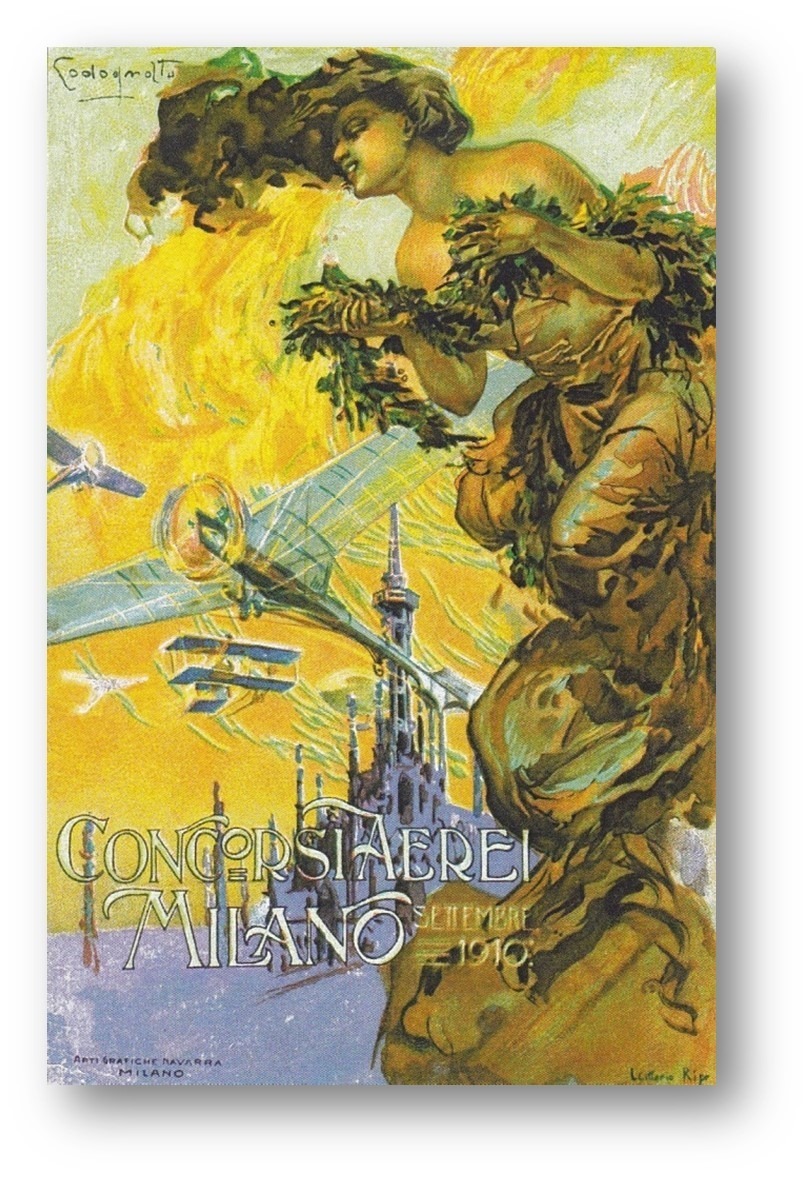
Aviation postcards. The collections dedicated to them are very important and followed by many enthusiasts as they are the most vivid testimony of aeronautical history from the beginning to the present day and can be developed chronologically or by themes (balloons, airplanes, airships, etc.). The postcards of the first air shows, designed by the great artists of the time, sometimes bear the Special Aviation Stamps. Whether photographic, printed in black and white or polychrome, they are the most beautiful expression and example of a collection of aerophilia.
Air mail labels. To the layman it may seem like a collection of little importance. Indeed, a collection of airmail service labels from around the world, either alone or applied to flown correspondence, also constitutes an uncommon overview and overview of airport services. They can be divided into two categories: those issued by postal administrations and those prepared by airlines; the latter in some countries and at certain times were issued jointly by the post office and by the air companies.
Air Postal Stationery. They are issued by the postal administrations, usually with the imprint of a postage stamp, the face value of which includes the entire ordinary and air delivery rate. A few decades ago, air postcards were widespread, while today, almost all over the world, the “aerogramma”, that is the air postal ticket, is more widely used. This is preferred due to its reduced rate over that applied to regular letters.
Newspapers carried by air. The collection ranges from “newspaper-letters” transported by balloons during the siege of Paris in 1870-71 to editions of the daily newspapers of this century, sometimes on special paper or with special stamps or inscriptions, sent to their destination with the lines overhead to reduce distribution times between print and sale.
Manifestini or Leaflets. A particular form of “air mail” is that consisting of messages printed in hundreds and thousands of copies and launched over towns and cities by civilian or military aircraft. In particular, the leaflets thrown by military aircraft on opposite fronts and territories during the war are one of the most important forms of propaganda organized by the commands assigned to “psychological warfare”. Their collection is the most vivid testimony of the different phases of each conflict.
Recovered Postal couriers after plane crashes. Postal documents, certainly not prepared or prepared in advance, defined as “interrupted flights” and commonly called crash covers on which the signs of burns following the fire of the aircraft or the traces of a stay in the water or on the snow where the plane fell.
The different sectors described can be divided, in turn, by states or by air routes (national, international, intercontinental, transoceanic), or by chronological periods.
A different classification, again, can be made taking into account the various airlines, or the type of vehicle used.
We will thus have collections dedicated to carrier pigeons, balloons and balloons, traditional, catapulted, jet and supersonic aircraft, airships, gliders, helicopters, missiles and rockets and spacecraft (astrophilathelia).
Each aerogram may have variations with respect to the model described: it may be missing postage stamps, such as certain private dispatches; sometimes it bears the pilot’s signature. Or such as postal stationery or military duty postage or newspapers, or having stamps in excess of the required rate, often to keep complete commemorative sets on envelopes, with clear philatelic intent on the part of the sender.
The history of aviation and all the postal and complementary documents (postcards, erinnophiles, entrance tickets to the aeronautical events and exhibitions, menus, musical scores, single numbers, guides and programs of the event, leaflets, etc.) with which we can tell about its development is unrivaled in linking collecting and philately to the facts of history. And even if air mail was not actually born with the airplane but with the balloon montés, which transported the mail out of Paris during the Prussian siege of 1870, it is still the means that has been the longest protagonist because the journeys of the Zeppelin airships had a limited time span, albeit glorious, fascinating and, unfortunately, ended in tragedy in 1939.
An aspiring Italian aerofilatelist must know the various stages of the prodigious journey of our aeronautics in order not to forget a luminous past to which today’s progress is indebted and also heir.
The launch in Italy of the first regular scheduled services officially began with SISA in 1926; However, it would be simplistic to think that that date represents a beginning from nothing, without previous attempts or projects, a necessary premise for subsequent development. 1926 represents both an arrival stage and a starting point for brighter destinations.
The first air transport projects addressed a singular type of “cargo” that the modest loads of the pioneering period aircraft could carry: mail.
The speed of the vehicle revealed the first useful and important service of the airplane in favor of the public and progress in the rapid transport of correspondence.
In the experiments of postal transport in peace and in war, the airplane had had precursors in carrier pigeons, balloons and dirigibles.
The pigeons had been of little use to the public, the balloon was subject to weather conditions and the airship had severe limitations in size, maneuvering difficulties and high costs of shelter and maintenance.
It was therefore logical that the plane, small, of modest cost and easy to shelter, which required a small space to take off and land, would be the most suitable means to conceive the rapid transport of correspondence.
Italy has the merit of having given one of the main impulses in the initial journey of air mail transport.
Especially since – an event more unique than rare in the history of the first flights of the pioneers – the enthusiasm of the enthusiasts was accompanied by the concrete support of the Ministry of Posts and Telegraphs with prizes offered in the first air circuits for aviators and the concession of post offices installed in airfields.
Those initiatives have left us the precursor stamps of the Circuits from 1909 to 1911 (Brescia, Florence, Verona, Bologna, Milan etc.) [fig.1], up to the first real transport of air mail, which took place on the occasion of “Franco-Italian Air Circuit” which occurred from September 17th to 20th 1911, on the Bologna-Venice-Rimini-Bologna route.
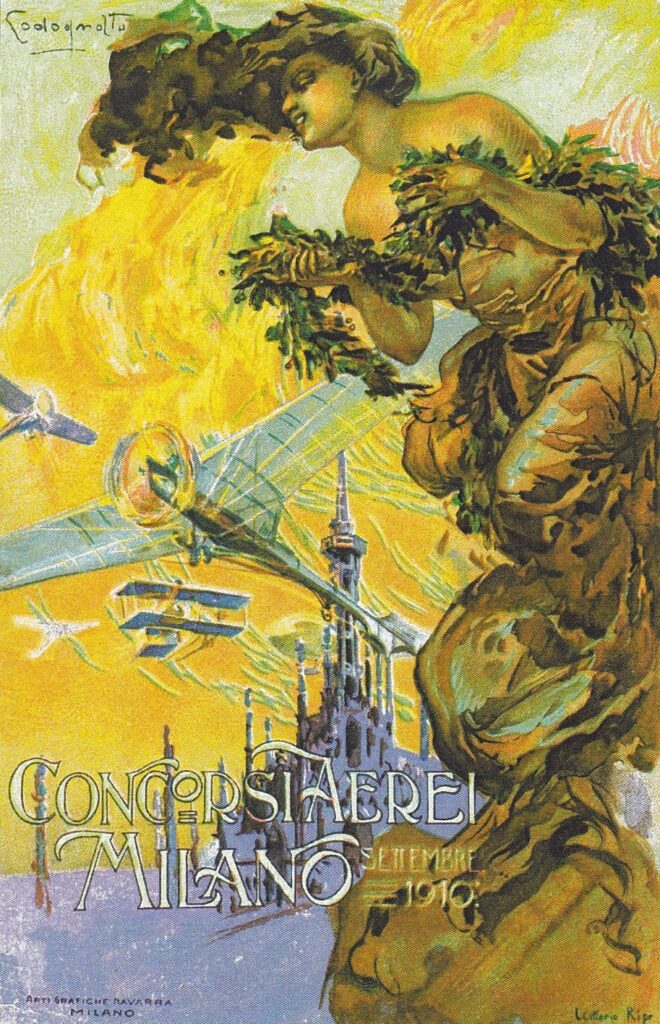
Polychrome vertical postcard signed Plinio Codognato issued on the occasion of the Milan Circuit in 1910 (Cat. No. 356).
The only Italian civilian pilot registered on the Circuit, the young Venetian Achille Dal Mistro, who took off out of competition from Bologna on September 19th on his Deperdussin, linked his name to the first Italian air mail transport, delivering the postal bag entrusted to him by the management to Venice Bolognese of the Post Office. [fig.2]
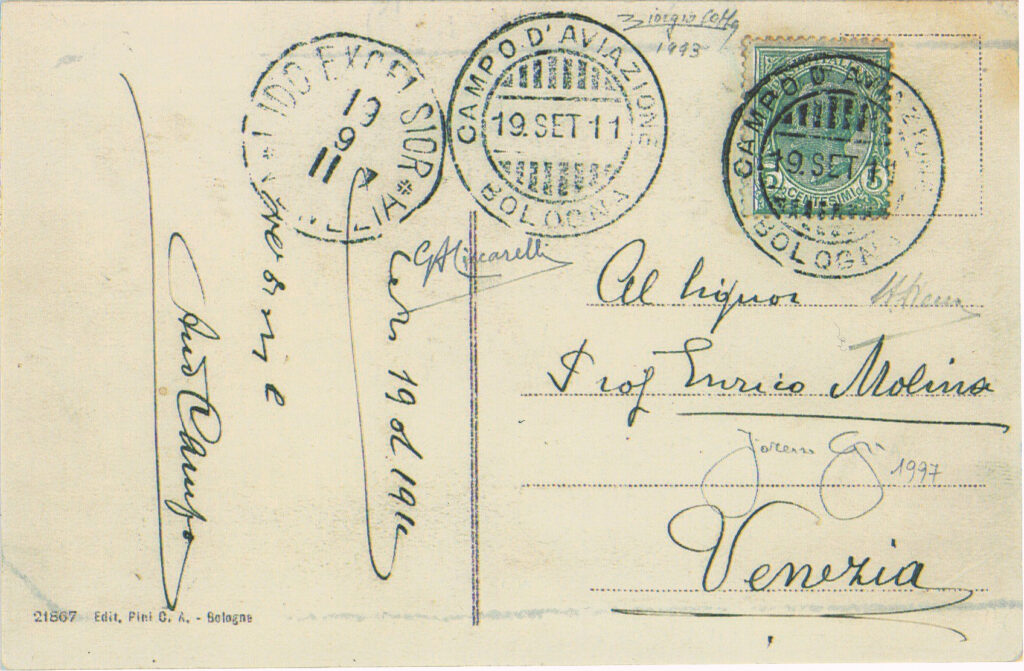
Fig.2 – The only known postcard, to date, transported by Achille Dal Mistro from Bologna to Venice during the first transport of air mail to Italy (Cat. 533).
In Italy, the first transport of correspondence, in which the postmarks bore the inscription Air Mail, took place during the Milan-Turin-Milan raid of October 29-31 1911. On that occasion, special mailing boxes were placed in various points of Milan with the caption: Setting up special postcards for the Milan-Turin Raid – Air Mail – Last levy: Sunday October 30th at 12 noon.
The Italo-Turkish war, in the years 1911 and 1912, recalling and engaging all our aviation activities in Libya, put an end to those Italian attempts and experiments to transport air mail.
The First World War was to give a sudden development to the air mail service. The very rapid progress of aviation, the disorganization of land transport caused by military operations, the danger of submarines that prevented maritime communications, also forced the postal administration to study the possibility of using the air vehicle for postal transport.
This study was entrusted, by decree of Minister Fera, of 9th April, 1917, to a Commission chaired by Augusto Righi, which concluded its work with the proposal to create a postal air link between Civitavecchia and Terranova, to improve difficult communications with Sardinia.
It was the very first Italian airline, inaugurated on June 11st, 1917, and lived only until the end of October, because the Caporetto retreat forced all pilots and aircraft to be called to the front. [fig.3]
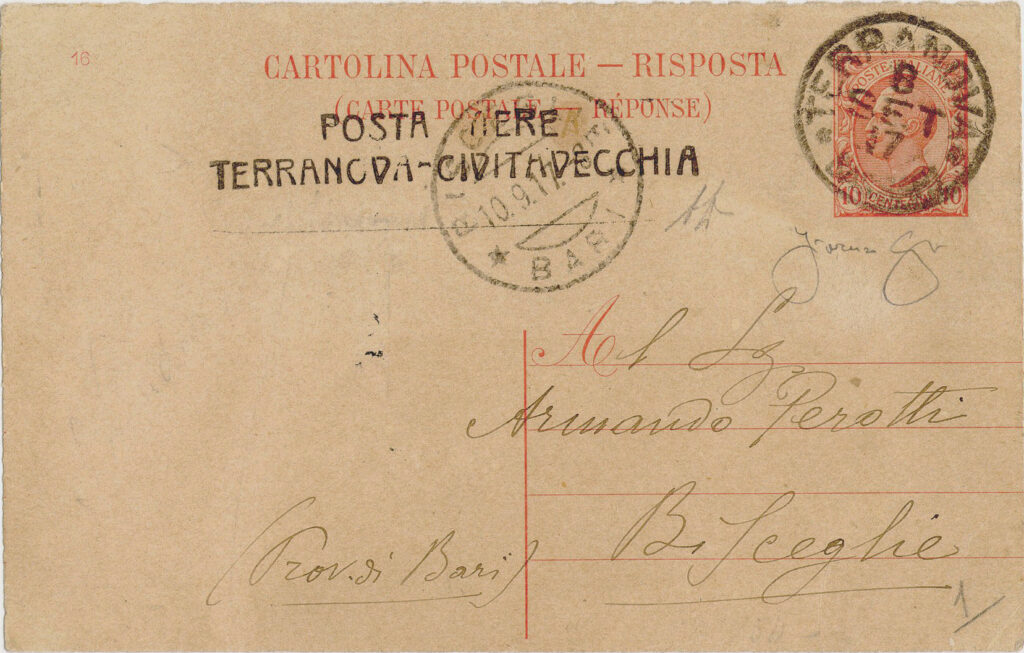
Fig.3 – Postcard of the Sardinia-Continent air mail flown from Terranova to Civitavecchia on September 8th, 1917 (Cat. N.794).
While the studies for the aforementioned line were being carried out, the ten. Mario de Bernardi, test driver of the Pomilio Company, carried out the experimental postal flight Turin-Rome (68 kg. of correspondence) and Rome-Turin (61 kg.) On a biplane of the company, in addition to newspapers .
It was on that occasion that Italy issued the world’s first airmail stamp.
On June 28th, 1917, a seaplane piloted by Ruggero Franzoni, with the engine engineer Francesco Romanuzzi, of the Southern Aviation Industries Society, made the postal flights Naples-Palermo and Palermo-Naples; also on that occasion a second air mail stamp was issued. Many other experiments in the transport of air mail were carried out by seaplanes of the Royal Navy to transport civil and, above all, military mail in the period 1917-1919: Valona-Brindisi; Transadriatic Air Mail Service; Albania-Italy; Livorno-Capraia [fig.4]. The Padua-Vienna military connections with SVA and Caproni aircraft should not be forgotten.
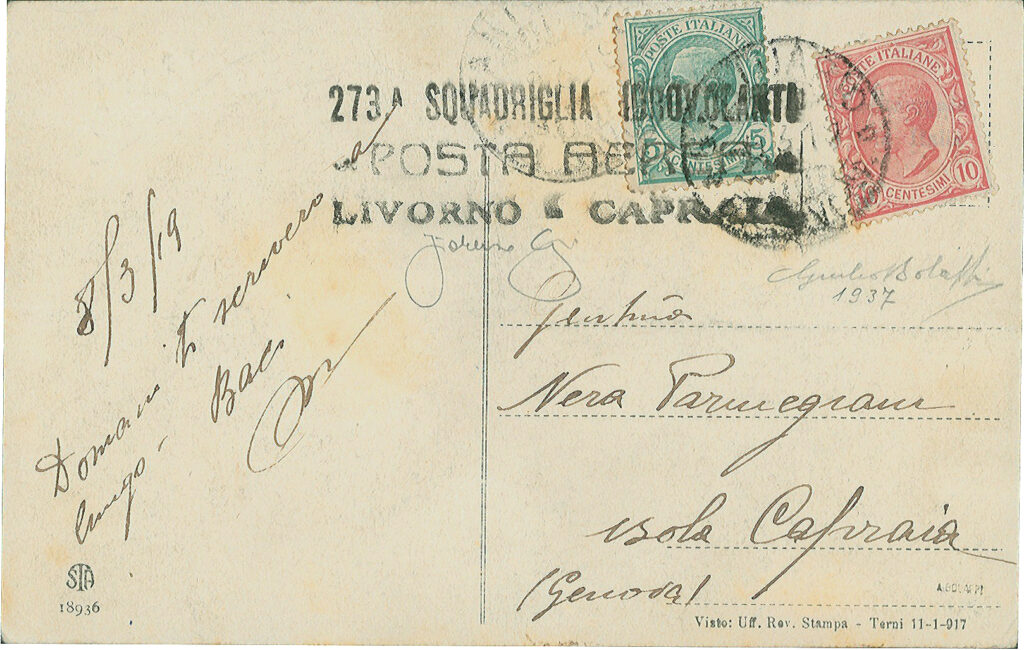
Fig.4 – One of the three known postcards of the mail / and air connection from Livorno to the island of Capraia, an experiment that lasted only three months (March-May 1919). One of the rarest and most difficult to find Italian aerograms (Cat. 994).
On January 1st 1919 the Experimental Group for Air Communications was established, stationed in Centocelle and commanded by Major Arturo Mercanti.
The department had to assess the cost-effectiveness and feasibility of the services and the need for connections, ground infrastructure and staff instructions. The projects of the Experimental Group were not limited only to Italy but also involved the East.
After the armistice the Ottoman Empire was occupied by the allies and Italy did not want to lose a chance of commercial penetration: so the General Directorate of Air Force, in the spring of 1919, arranged for a Rome-Constantinople flight of ten aircraft, five SVA and five Caproni whose formation took the name of First Team of the Levante.
The raid began on June 9th with the first departures of the ten aircraft, of which seven reached Constantinople.
On June 20, the Squad made a beautiful demonstration in flight over the minarets of mosques and the Golden Horn by throwing bilingual leaflets printed on white, red or green paper that almost all ended up in the waters of the Bosphorus.
In 1919 the military airship M.1, whose cabin was transformed to accommodate over 30 passengers, also carried 800 people in 54 flights on which mail was also loaded.
Also the military airship F.6 of Forlanini, duly transformed, made numerous flights with the transport of passengers and mail on the Milan-Venice line and back. (These flights continued in 1920, with postal transport even during the strikes, and in 1921).
After the war, new horizons opened up for civil aviation, made wider by the progress achieved by aircraft and by the greater experience acquired by pilots, designers and factory workers.
New energies and fresh enthusiasm were transfused in the flights of peace, aimed at tracing new transport routes, also through attempts and connections that had something prodigious.
In this respect we must see the flights of Antonio Locatelli, the first air postman of the Andes, in 1919 [fig.5], and by Arturo Ferrarin and Guido Masiero, who built the first air link between Italy and Japan in 1920.
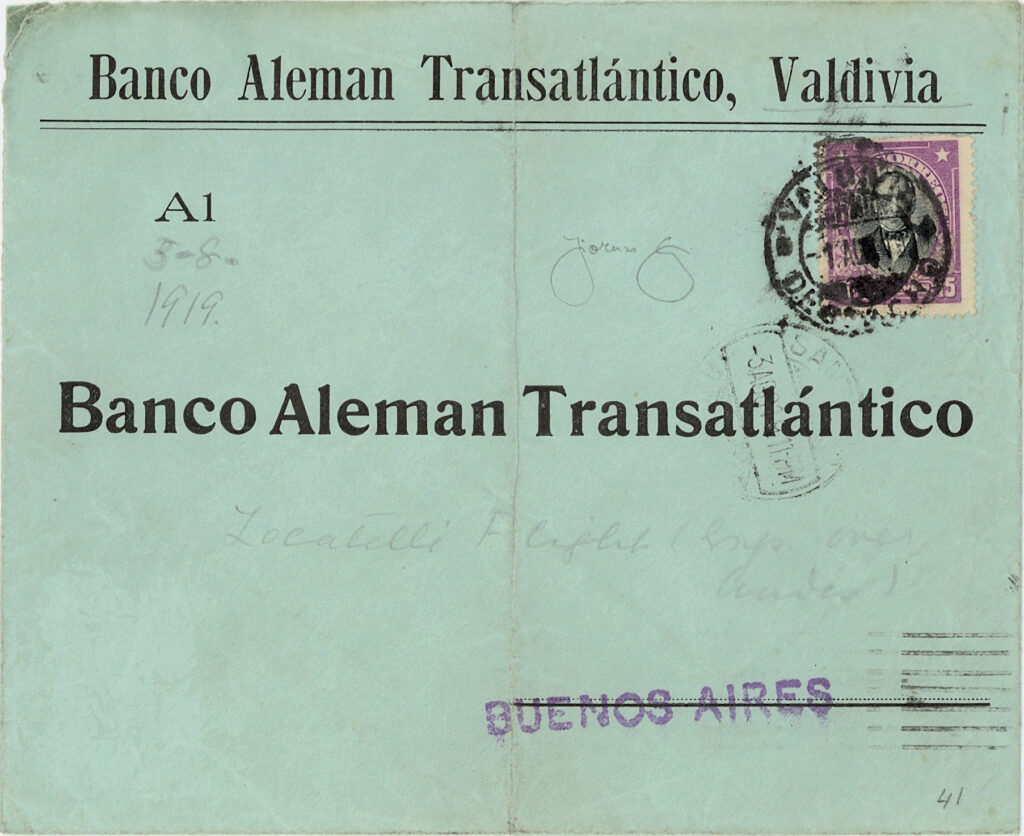
Fig.5 – Chile-Argentina first airmail. Aerogram transported from Santiago to Buenos Aires by the Italian pilot Antonio Locatelli who for the occasion made the first flight of the Andes from the Pacific to the Atlantic (Cat. No. 1018).
In this respect we must see the other pioneering flights in South America, almost all with postal transport, of our pilots: Liut and Guicciardi in Ecuador, Rolandi and Ancillotto in Peru, in 1920 and 1921, and many others.
All these enterprises contributed in an undeniable way to glimpse the immense possibilities offered by aviation in connecting peoples: and it is symptomatic that our pilots, in those pioneering flights, agreed to transport the mail, rendering a useful service to distant populations. and isolated.
In this respect we must see the epic flights of Umberto Nobile with the Norge airship in 1926 and with the Italia airship in 1928 and the consequent drama of the “red tent”.
In this respect, cruises in the Western Mediterranean in 1928 and in the Eastern Mediterranean in 1929 should be seen.
In this respect, the magnificent cruises taken in 1925 and 1927 should be seen [fig. 6] by Francesco de Pinedo and those of Italo Balbo in 1930 and 1933 [fig. 7].
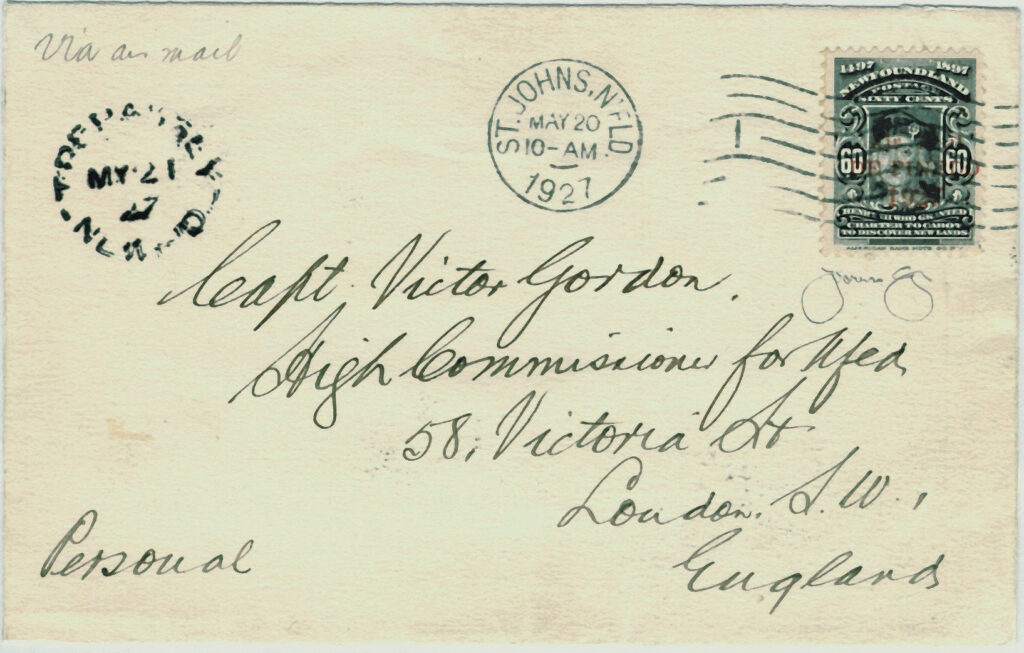
Fig.6 – Aerial Cruise of the Atlantic by Francesco De Pinedo. Envelope from Trepassey (Terranova) to Rome May 23rd-June 16th, 1927 (Cat.no.1641). 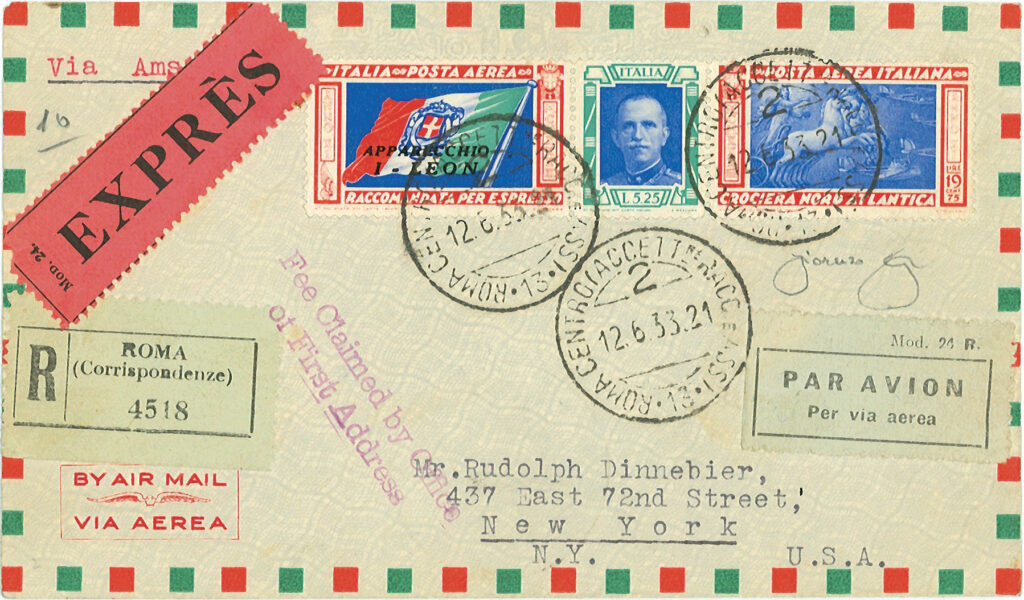
Fig.7 – Decennial Air Cruise. Aerogram stamped with a 25 Lire I-LEON triptych for Amsterdam (Cat. No. 2853).
In this respect, Francis Lombardi’s flights from Rome to Buenos Aires and from Rome to Mogadishu in 1934 must be seen.
On 11 September 1939, the Italian Transcontinental Airline Company (LATI) became independent from the parent company Ala Littoria and, using what it had already prepared, on December 21st it inaugurated the Rome-Rio de Janeiro line [fig. 8].
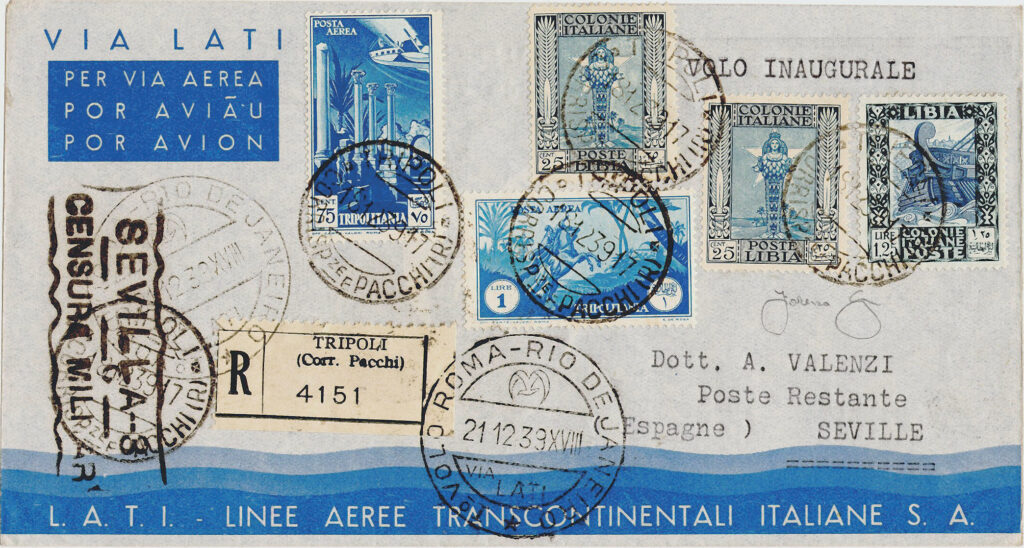
Fig.8 – LATI Company First flight Rome – Rio de Janeiro. Courier from Tripolitania of the Rome-Seville leg with cancellation of the 2nd type (Cat. No. 3887).
The co-directors of the Company were Attilio Biseo and Bruno Mussolini, the animators of the Sorci Verdi (10,000 km raid of three SIAI S.79 on the Guidonia-Dakar-Rio de Janeiro route: January 24-25, 1938).
The LATI connection was carried out with stops in Seville, Villa Cisneros, Isola del Sale (where an entire airport was built with two hangars, radio and weather stations and all airport services) and in Natal.
The S.83 of the Society left Rome at night, from Guidonia airport, to reach the Atlantic during the day.
Until the suspension of flights imposed by Brazil on December 24th, 1941, LATI made 211 Atlantic crossings, carrying 434 passengers, 70 tons of mail and 129 of goods.
The postal success of that line, which was subsequently extended to Buenos Aires in July 1941, was immediately outlined because, while in Europe in arms all communications were disturbed and largely suppressed, the currents of postal traffic converged towards Italy. ‘Central, Northern and Eastern Europe channeled towards America, and in the opposite direction America used the new line as the only way of communication, to start its own postal courier for European countries.
Finally, we cannot fail to mention Mario de Bernardi’s first jet flight on November 30, 1941 with the Campini-Caproni aircraft, the first jet-propelled aircraft to transport air mail [fig. 9].
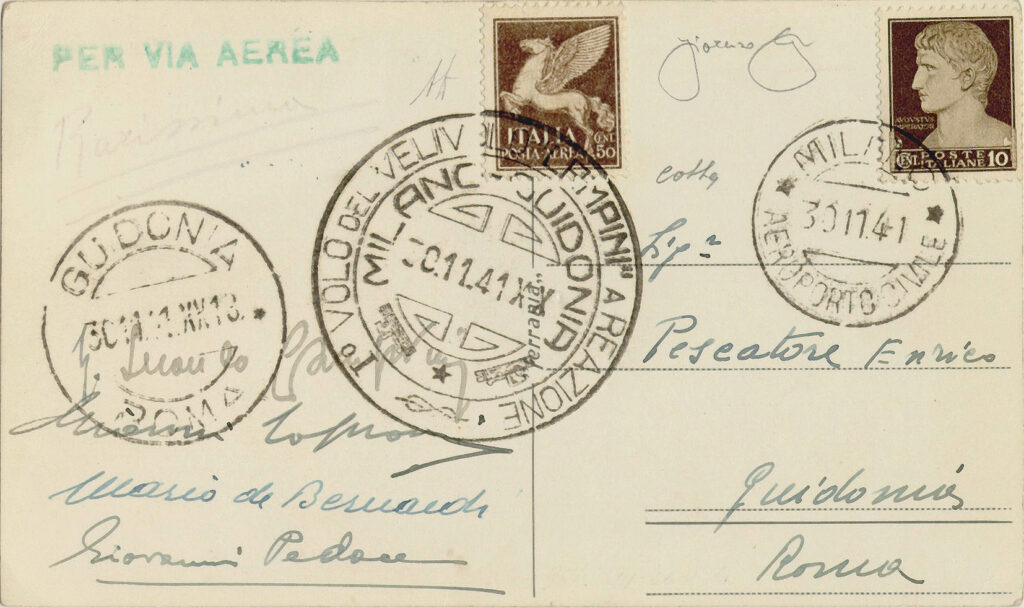
Fig.9 – Primo volo postale a rezione Milano-Roma del 30 novembre 1941. Cartolina speciale con gli autografi degli aviatori, del progettista e dei costruttori del velivolo (Cat. n. 4020).
In conclusion, I can certainly say that one of the most fascinating prerogatives of Aerophilia is that of combining the taste for research and collecting with the study of the most fascinating and mythical period of the twentieth century that saw the realization of Man’s oldest dream: flying! Furthermore, in this context there is the certainty that every day new discoveries can be made and thus new pieces can be added to this history.