

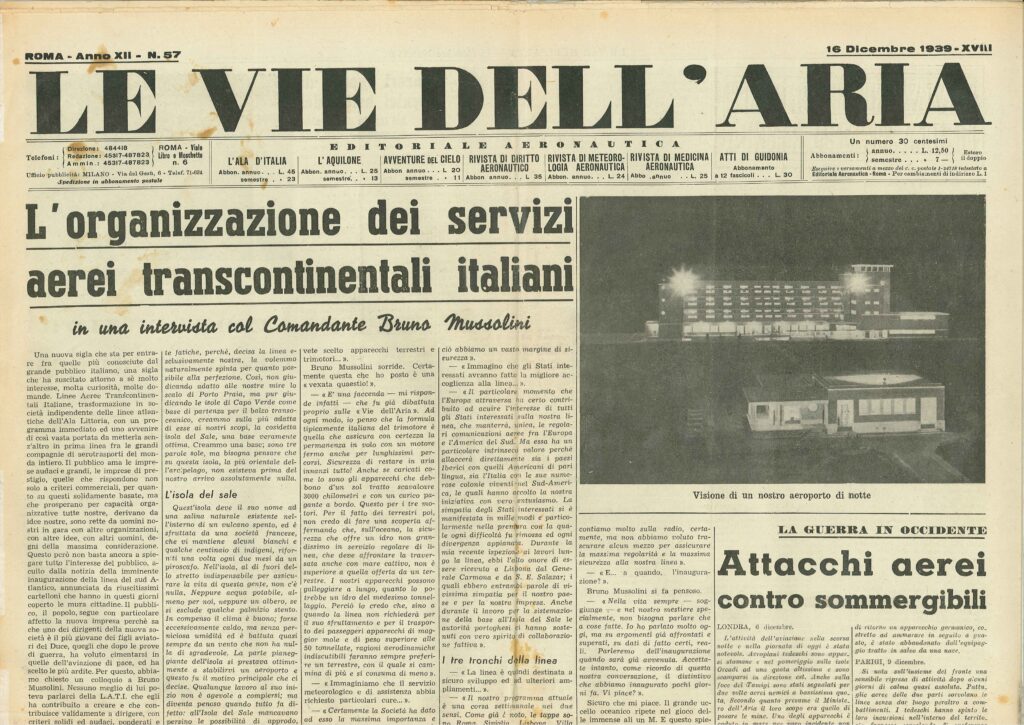
in an interview with Commander Bruno Mussolini
introduction by Flavio Riccitelli
To better understand the events that led Italy to enter the international scenario of transatlantic air transport, through the establishment of the LATI (Italian Transatlantic Air Lines), I think it is useful to re-read the sources, the first-hand news, the voice of the protagonists. To this end, an interview with the son of the Duce, general manager of the newly formed company, is presented here, edited by the journalist Enrico Meille and published in the magazine “Le Vie dell’Aria”, on December 6th, 1939 (n. 57), when it was on the eve of the line inauguration.
To better contextualize the interview and make what was reported more understandable, also in terms of value, I think it is useful to briefly describe the events that preceded the creation of the new line.
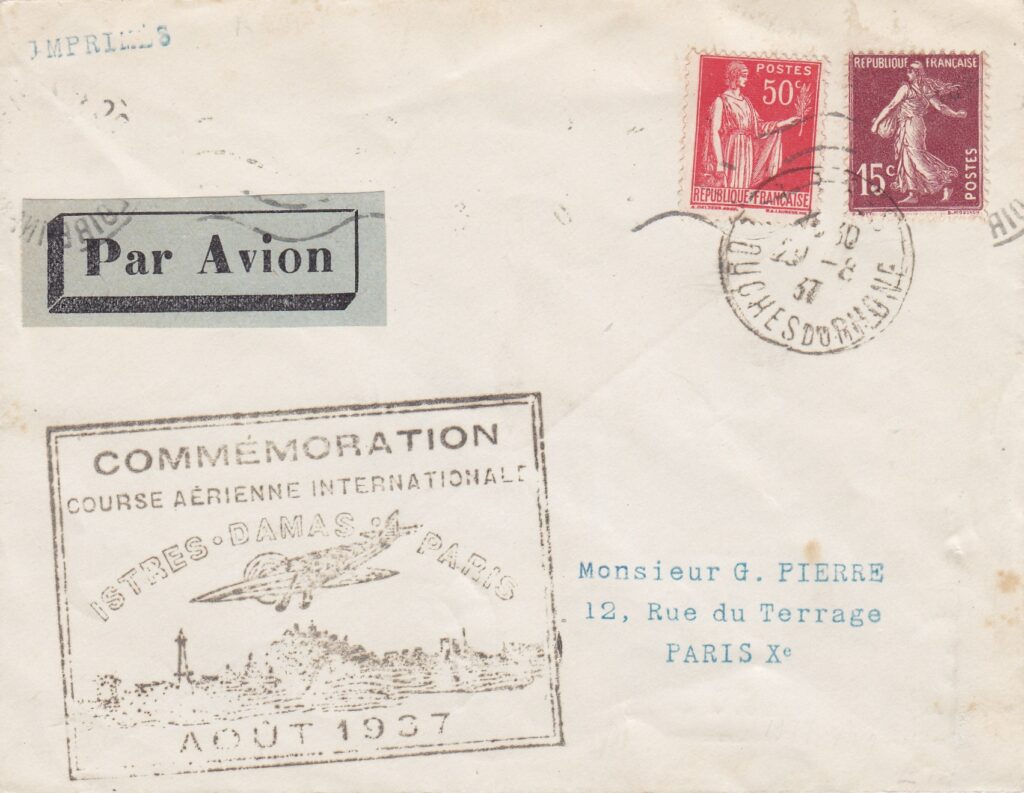
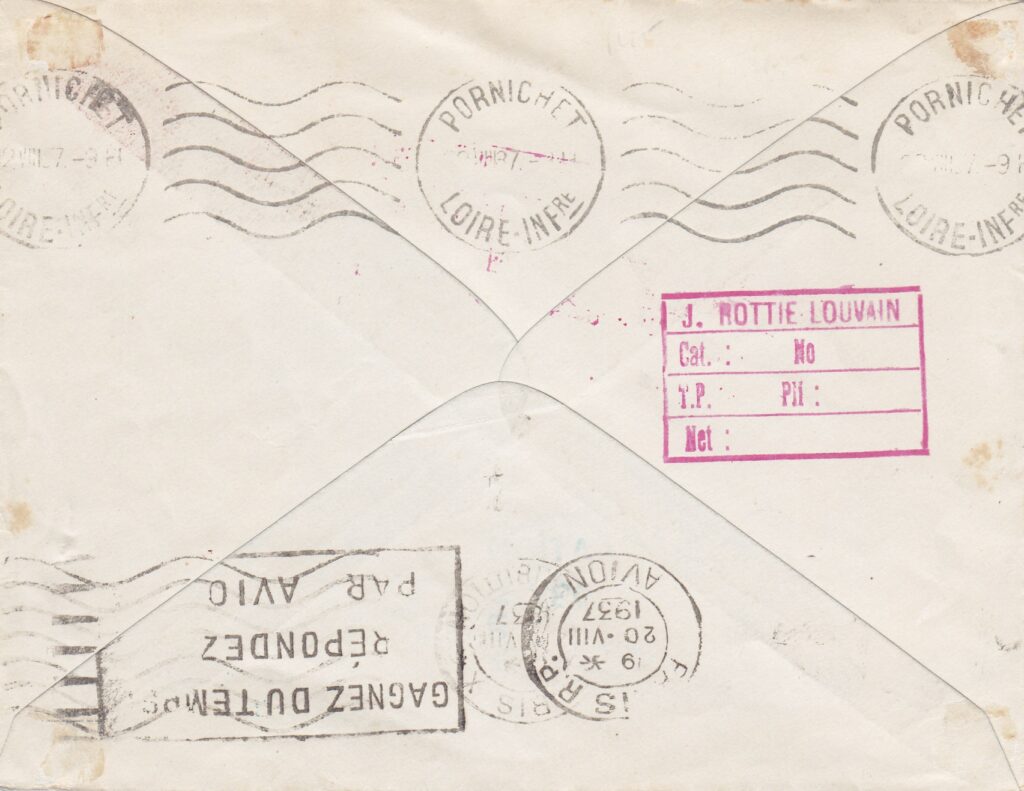
The main reason that stimulated the intention to carry out such a enterprise, in the ways in which it was then effectively organized, were undoubtedly the 1937/1939 feats of “Sorci Verdi”, particularly in the Istres-Damascus-Paris race and in the Rome-Rio de Janeiro record, all carried out with a “land” aircraft, the magnificent SM.79 whose Bruno Mussolini and Attilio Biseo were the protagonists.
A general plan was drawn up and an autonomous experimental section set up within the Ala Littoria, reporting directly to President Umberto Klinger (Fig. 3B). At the head of this structure were placed, precisely, Colonel Attilio Biseo and Commander Bruno Mussolini. For the practical implementation of the program it was established that the Italian line would be managed in collaboration with the already existing foreign lines: the French “Air France” and the German “Deutsche Lufthansa”. The itinerary should have been as follows: Rome (Guidonia) – Marseille – Casablanca – Villa Cisneros – Dakar. From here the ocean flight to Natal would begin and then the overflight of the Brazilian coast to Rio de Janeiro. It was drawn up, by mutual agreement, a schema among Ala Littoria, Air France and Deutsche Lufthansa, where the two foreign companies took the commitment of providing the italian aircrafts with all necessary services for the line exercise with included radio and weather assistance provided by ships located in determinated location in the ocean.
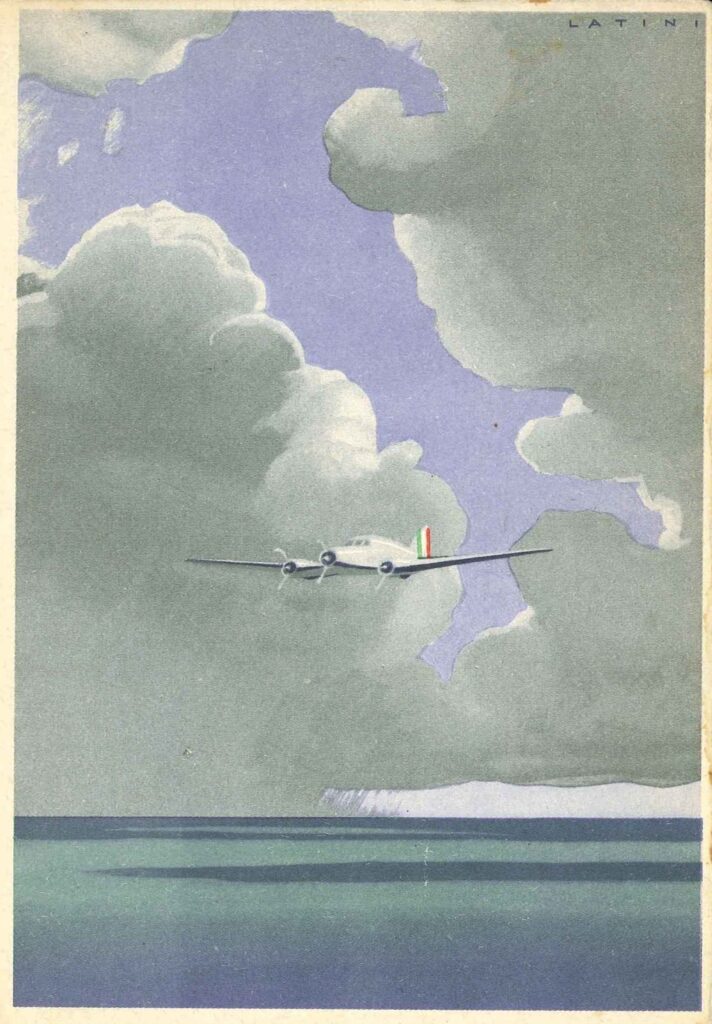
Fig.3a – Advertising postcard by the illustrator Latini, in which the outline of Italy is drawn with the game of clouds, accompanied by an airplane flying over the ocean. 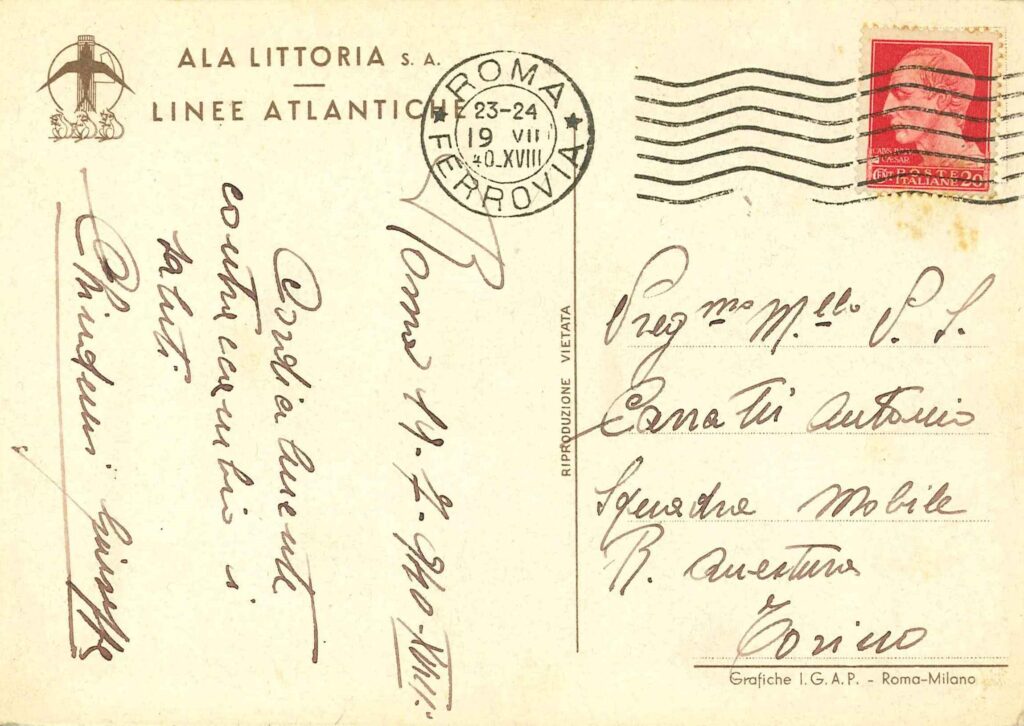
Fig.3b – Back of the advertising postcard on the cover, which shows the initial filiation of the new company at Ala Littoria.
In the meantime, while the negotiations seemed to be on the way to concrete realization, the management of the Atlantic Lines proceeded to organize its own organizational structure, both central and peripheral. In addition, it was starting to equip its own air fleet, largely made up of SM.83. It was an air vehicle directly derived from the SM.79. The new plane, also a three-engined one, repeated the shapes of the bomber, but weighed down by the larger fuselage, capable of carrying ten passengers and four crewmen on routes of 4,800 km, with a maximum speed of over 440 km / h. It was therefore presented as the best solution to the Ala Littoria problems.
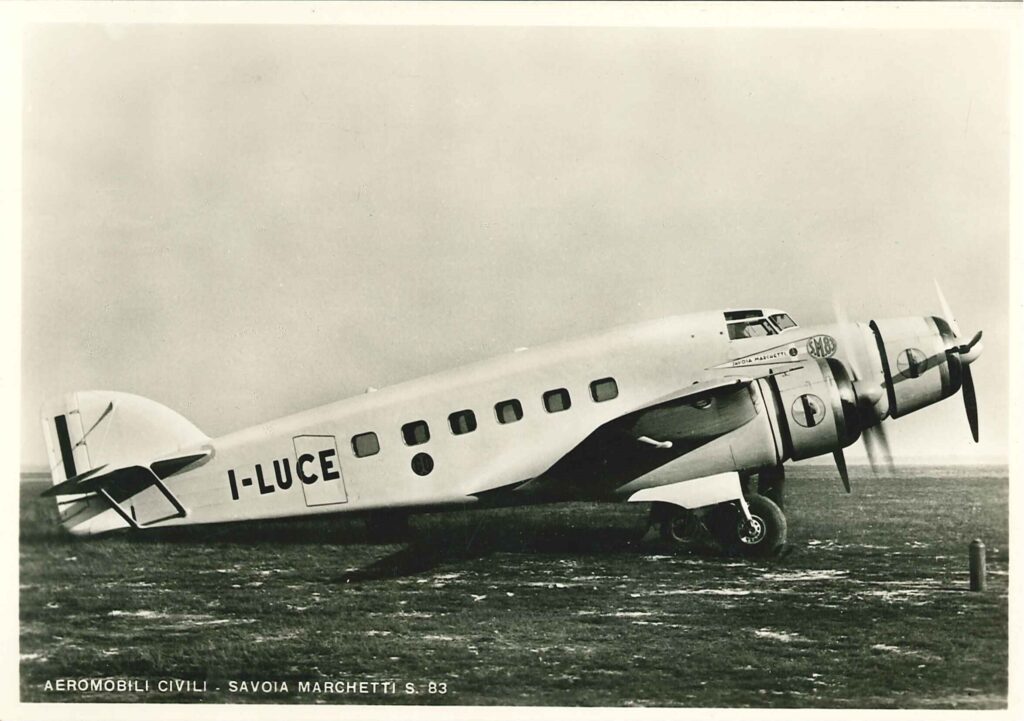
Fig.4a – The prototype of the SM.83 taken up during the first tests, whose profile is also recalled in this advertising postcard of the company. 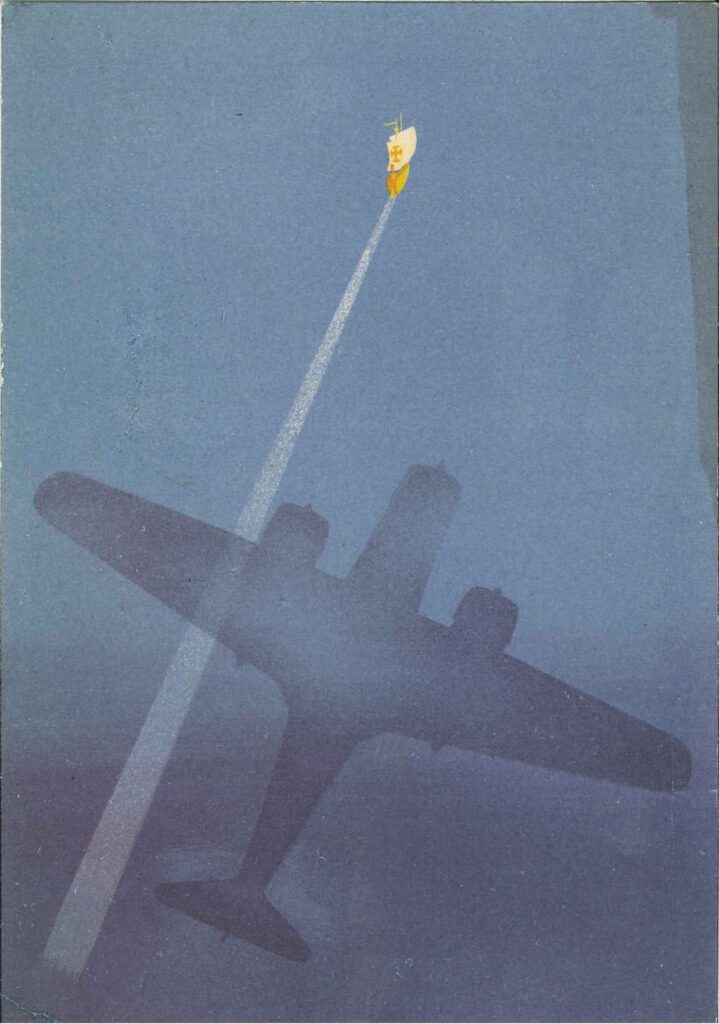
When the first experimental flights seemed imminent, important events matured in the European political framework, following which the French government decided not only not to ratify the tripartite agreement, but also to deny the Italian aircraft permission to fly over the French colonial territories . It was therefore decided to find another way.
It is in this context that the interview we propose here should be read, knowing how difficult it was to solve the logistical problems that arose immediately after the simple choice of the route, taking into account that, to create an airline, it was not enough to cancel on a card geographic route and trace another on a new route. The right value must therefore be given to the enormous organizational effort made in less than seven months.
Beyond the technical conflicts that arose around the choice of the carrier, it is above all to these events and the new tasks that followed, with the use of adequate capital, that the decision to detach the Atlantic Lines from the Ala Littoria. On September 11, 1939, therefore, the LATI anonymous company was established with a share capital of 40 million lira. The presidency was initially assumed by Raffaele Ricciardi, then replaced by General Aurelio Liotta. Colonel Attilio Biseo was appointed Managing Director, who, together with Bruno Mussolini, held the position of General Manager.
At this point, we just have to listen directly to the voice of one of the protagonists.
A new brand that is about to enter among those best known by the Italian public, a brand that has aroused a lot of interest around it, a lot of curiosity, a lot of questions. Italian Transcontinental Air Lines, transformation of the Atlantic lines of the Ala Littoria into an independent company, with an immediate program and a future of such far-reaching as to undoubtedly put it at the forefront of the major air transport companies in the world. The public loves bold and large companies, prestigious companies, those that not only meet commercial criteria, although solidly based on these, but that thrive on our own organizational skills, derive from our ideas, are run by our men in competition with other organizations, with other ideas, with other men, worthy of the utmost consideration. However, this is still not enough to explain all the interest of the public, sharpened by the news of the imminent inauguration of the South Atlantic line, announced by very successful posters that have recently covered the city walls. The public, the people, follows the new enterprise with particular affection because they know that one of the leaders of the new company is the youngest Duce’s aviators sons, the one who, after the war trials, wanted to try his hand at those of aviation of peace and has chosen the most daring. This is why we asked Bruno Mussolini for an interview. No one better than him could tell us about the LATI that he has helped to create and that contributes validly to direct, with solid and audacious criteria, thoughtful and youthfully agile.
The room in which we are received, all clear, very bright, is very different from the cumbersome room of furnishings (three meters by three, accommodation for three people) of the Asmara and the shack refurbished to the best of Son San Juan. But the smiling face is the same, the cordiality with which we are received is identical and the answers to the various questions that we gradually ask it are always precise. Moreover, even here, as then, the aeronautical maps appear on the wall with the direct lines of the routes already marked: only now the large maps with transverse isogonic projection embrace Europe and America all at once, while then they were the small imprecise maps of an ill-known empire or the precise ones of the western Mediterranean. But they are, now as then, the image of the company which is still daring and winged.
Organization of the infrastructure
We first ask about the organizational difficulties that company has had to overcome.
They have not been very few- says Bruno Mussolini – Just think that all the agreements were already made in order to make common use of some bases established by other existing transatlantic lines, which we would have helped to perfect by organizing all our weather services and assistance on them; sudden difficulties of a sometimes unpleasant nature forced us to do it all over again, creating an infrastructure system exclusively ours; and this cost us a lot of time and also a lot of effort, because, having decided on our own line, we naturally wanted it pushed to perfection as far as possible. Thus, not judging Porto Praia stopover suited to our aims, but also judging Cape Verde island as a starting point for the transoceanic leap, we created on the most suitable of them for our purposes, the so-called Island of Salt, a really great base. We created a base; these are three words alone, but we must think that on this island, the easternmost of the archipelago, absolutely nothing existed before our arrival..
The Island of Salt
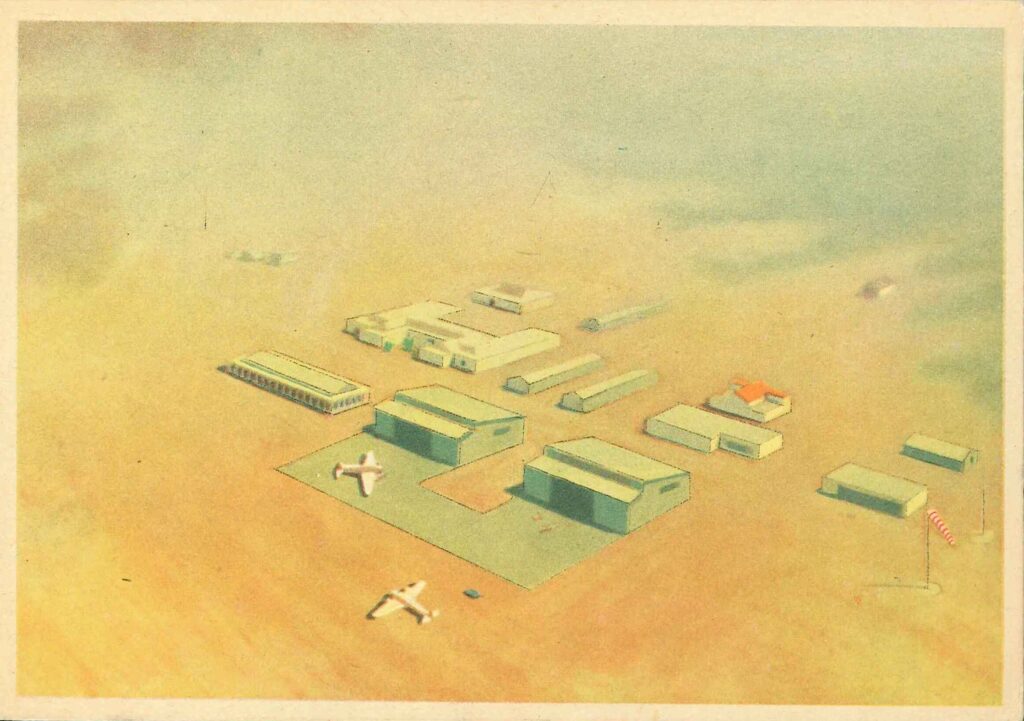
This island owes its name to a natural salt mine existing in the interior of an extinct volcano, and is exploited by a French company, which maintains some whites and a few hundred natives, supplied once every two months by a steamer. On the island, apart from what is strictly necessary to ensure the lives of these people, there is nothing. Not even drinking water, at least for us, not even a tree, if we exclude some palm trees. On the other hand, the climate is good; perhaps excessively hot, but without pernicious humidity and it is almost always beaten by a wind that has nothing unpleasant about it. The flat part of the island was well presented to establish an airport and this was the main reason that decided us. Any work at its beginning is not easy to accomplish; but it becomes painful when everything is lacking: the island of Sale lacked even the possibility of landing, it lacked the means of transshipment, in a word, everything was missing! So, we had to start launching from the same ship that was carrying the first men and the first material for the base, the maone! But we wanted to make the island of Salt our base and we did it. At first we built simple huts, to shelter the men, then we brought everything necessary for a good start: power plant, workshop wagons, large shacks, machines, tools, furnishings, food, water, radio stations, hangars … a world even. Now the base is there. A perfectly level course of 2000 meters by 1800, without a hole, without a stone. It took a while to smooth it out! And then a small village, made of shacks that have only the picturesque name of the shack, but they are real little houses equipped with all comforts; two large hangars will house our Atlantic tract aircraft and those to come. In addition, there is a perfect workshop, able to carry out any repairs and overhauls, a perfect power station and two radio stations for assistance to aircraft both for the meteorological part and for the direction finding.
Overall, fifty men will be able to live and work at the base, to whom everything will be done to make their stay comfortable. The work of Commander Moretti, of Eng. Biseo and that of Commander Castellani.
The choice of aircraft
“One issue that is often raised about transatlantic airlines is the choice of aircraft. You have chosen terrestrial and triple-engine aircraft … Bruno Mussolini smiles. Certainly this is a “vexata quaestio!”
It’s a matter – he replies in fact – that it was already debated precisely on the “Vie Dell’Aria”. In any case, I think that the typically Italian formula of the triple engine is to ensure with certainty the permanence in flight with a stopped engine even for very long distances. Safety of staying in the air above all! Even if loaded as they are the air-vehicle that have to climb over 3000 kilometers all at once and with a paying load on board. This is for the three engines. As for the land air-vehicles, I do not think I am making a discovery by stating that, on the ocean, the safety offered by a not very large seaplane in regular scheduled service, which has to face the crossing even in bad seas, is not higher than that offered from an land air-vehicle. Our planes can float as long as a seaplane of the same tonnage could. So I believe that, until when the line won’t require for its exploitment and for passengers transport, bigger vehicles with weight higher than 50 tons, aerodynamic reasons will always make you prefer a land air-vehicle, with whom you walk more and consume less.
Let’s imagine that the weather and assistance service required special care …
Certainly, the Society has given it the utmost importance and I believe that truly everything possible has been done. Under the direction of Dr. Martinozzi in fact we have installed, in addition to European stations, the stations of Villa Cisneros, Island of Salt, Isola Fernando de Noronha, Pernambuco and Bahia. We also have two ships, the “Alato” and the “Librato”, which act as meteorological and direction finding stations in the middle of the Atlantic. The stations of Island of Salt and Pernambuco are double and also function as news gathering centers for the periodic issue of bulletins. As for the ships, the first depends on the base of Island of Salt and is located 500 kilometers south-west, along the route, and the second which depends on the base of Pernambuco, it is also located on the route 500 kilometers northeast of Fernando di Noronha. In this way, not only the air-vehicles can be followed point by point during the journey, but we can also know the weather conditions along the entire route, in advance such as to allow us to adopt the variants suggested by the pressure and depression trends.
To do this, the aircraft must therefore have a much greater autonomy than that strictly necessary for the crossing.
Indeed. The aircraft take off from the Island of Salt with a load of four tons, in addition to the payload of 700 kilos. Given the speed and finesse of our plane, the excellent “SM 83”, we can afford the luxury of traveling very short while maintaining a very high average, certainly higher, without headwind, at 350 kilometers per hour. As you can see, therefore, we have a large margin of safety.
I imagine that the states concerned will have made the best reception to the line.
The particular moment that Europe is going through has certainly contributed to sharpening the interest of all the States concerned on our line, which will keep, as one, the regular air communications between Europe and South America. But it has a particular intrinsic value because it will directly connect both the Iberian countries with the American ones of the same language, and Italy with its numerous colonies living in South America, which have welcomed our initiative with real enthusiasm. The sympathy of the States concerned was manifested in a thousand ways and particularly in the care with which every difficulty was removed and every difference smoothed out. During my recent inspection of the works along the line, I had the high honor of being received in Lisbon by General Carmona and by HE Salazar; both of whom had words of sympathy for our country and for our company. The Portuguese authorities also supported us with a true spirit of active collaboration during the work for the reorganization of the base of the Island of Salt.
The three sections of the line
The line is therefore destined for safe development and further expansion …
Our current program is a weekly two-way run. As is already known, the stops are Rome, Seville, Lisbon, Villa Cisneros, Isola del Sale, Pernambuco, Rio de Janeiro.
Are you also planning to carry passengers?
The line is for now exclusively postal. But in the near future it could also become for passengers. However, any project is premature … although I can already say that a passenger line, in which the comfort of the journey must, in my opinion, be at the forefront, will eventually be exercised only with large seaplanes.
As an internal organization of the line, how have you regulated yourselves?
The line is divided into three sections. The first, improperly called European, is managed by three devices and goes from Rome to Isola del Sale. It would therefore be more properly a European-African-semi-Atlantic section, if we consider that the crossing from the African coast to the Isola del Sale includes a thousand kilometers of open sea. Then there is the purely Atlantic section, served by four aircraft and finally the American section, with three aircraft per hour, but which will have four when the line reaches Buenos Aires.
As for the pilots …
Men who can be safely trusted. The crew chiefs of the first section are in fact Suster, Carelli, and Rapp. Those of the second Castellani and Satti, who have their headquarters on the Isola del Sale while Paradisi and Moscatelli have them in Pernambuco. In America the devices are then entrusted to Mencarelli, Ferioli and Pavia. All people who know their stuff and who, moreover, have followed a particular course of astronomical navigation, which has given really flattering results. We rely heavily on the radio, of course, but we did not want to neglect any means to ensure maximum regularity and maximum safety to our line.
And … when, the inauguration? Bruno Mussolini becomes thoughtful.
In life always – he adds – and in our profession especially, we must speak only when things are done. I talked a lot today, but on topics that have already been addressed and overcome, on certain, real facts. We will talk about the inauguration when it has already taken place. In the meantime, as a reminder of our conversation, accept the badge we inaugurated a few days ago. You like it?
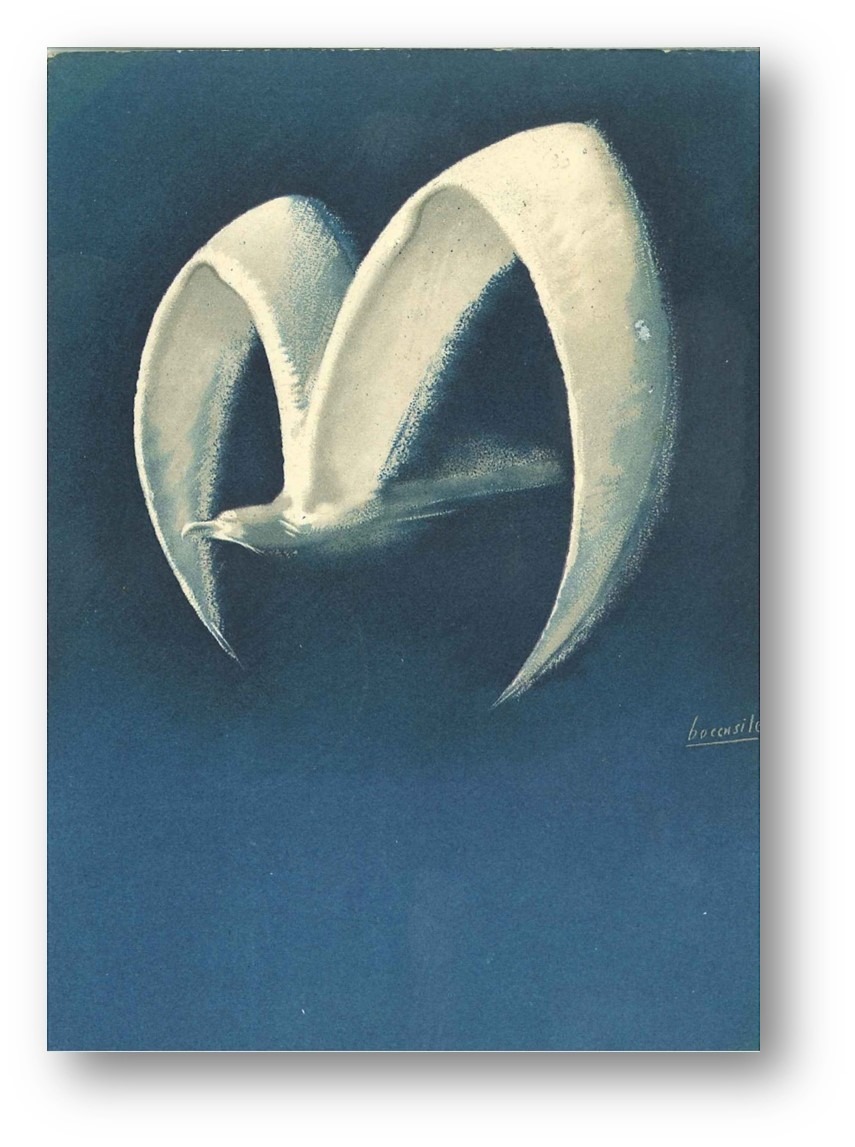
Sure I like it. The great oceanic bird repeats an M in the game of immense wings. And this explains many things.